

In the hit Netflix show Black Warrant, a rookie warden takes his first steps into Delhi’s Tihar Jail complex. He finds a warren of dark, dank cells, packed to the brim with prisoners. Conditions are harsh; violence and abuse are rampant. What kinds of brutal criminals, he wonders, have been sentenced to this hell? To his horror, many of them are just petty offenders – pickpockets, chain-snatchers, and the like. An aged prisoner confides that most of them are probably innocent, no matter their convictions.
Had our rookie walked into Tihar today, someone might have mentioned a statistic that would horrify him even further. The vast majority have not been convicted of the crime that put them there. Many of them have never been convicted of anything at all.
As we speak there are over 500,000 people in India’s prisons, the fourth-largest incarcerated population in the world. We’re beaten in absolute numbers only by the United States (the reigning incarceration champion), China (the world’s largest authoritarian state), and Brazil (one of the highest crime rates in the world).
But compared to our population, 500,000 isn’t all that many. It’s only about 40 per 100,000 people. If we had the incarceration rate of America, there would be 6 million people in our prisons. If we imprisoned people at the same rate as El Salvador, a global leader in that particular field, we’d have to lock up 25 million people. Even countries like Norway and Ireland, with fairly lenient judicial systems, imprison people at higher rates than we do.
You’d think this would mean our prisons sit empty. That is, sadly, the opposite of true. Our occupancy rates routinely sit well over 100%; the infamous Tihar complex in Delhi holds twice as many people as it was built to.
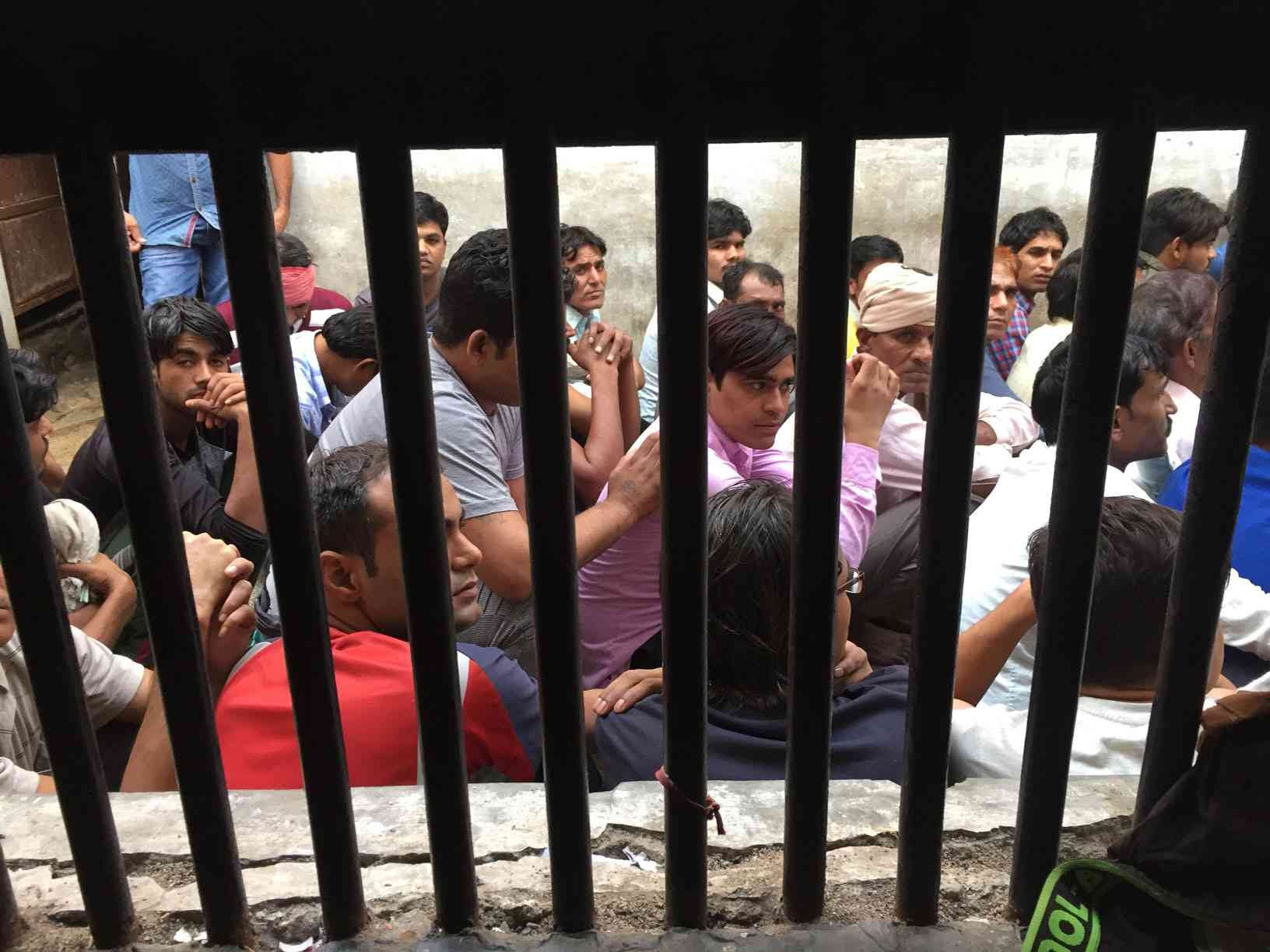
Why are we convicting more people than our prisons can hold? There’s a simple answer: we aren’t. Three out of four people in our prisons have never been convicted of a crime.
They’re what the Indian system calls ‘undertrials’ – either their trials are underway, or, more commonly, they’re waiting for their trials to even start. And that can take a while. Months, at minimum. Years, at times. These individuals, according to Indian government statistics, make up about 75% of the total incarcerated population at any given time.
This is a problem, and it’s a very Indian one. The U.S. incarcerates people at a rate 10 times higher than ours, but only 1 in 5 of their prisoners have not yet been convicted. That proportion is about the same or lower in the U.K. and China (though China numbers are an estimate - they’re not open about their data).
Our figure of 3 in 4 is beaten only by a handful of countries like Bangladesh, Haiti, and Lebanon.
And that should worry us, considering the other countries that are part of this exclusive club. Haiti is increasingly seen as a failed state with no functional governance; armed street gangs have repeatedly occupied and looted its court buildings. Lebanon has been going through a severe economic crisis that has seen its court system grind to a halt amidst understaffing, frequent judicial strikes, and power blackouts. Anecdotal accounts speak of prisoners missing their trial dates because the authorities can’t afford the fuel to transport them to court.
We can’t hide behind the same excuses. We’re not a rich country, or one with a particularly high state capacity, but we are a somewhat functional democracy with an actual government.
So what’s gone wrong? Where did this start?
A Penal History of India
There’s a trend in historiography: complaints always seem to echo backwards in time. No matter how far back you go, someone’s been complaining about the same things we are. Ancient Romans complained about their kids being hedonistic layabouts, Medieval Londoners muttered about all those immigrants comin’ over ‘ere, and so forth. Such is the case with prison overpopulation in India. The situation backlog may be the worst it’s ever been, but the issue goes back a very long time.
When the British colonial administration first set up colonial India’s penal system, it replicated the conditions of European prisons of the time – grim, squalid, and packed to the brim with convicts forced to do hard labor to earn their keep. In Britain itself, prison conditions were described by the reformer Elizabeth Fry as a ‘dreadful scene of misery, riot, idleness and vice’ after a visit to Newgate Prison. Fry and her colleagues eventually inspired a clamor for reform, putting things on a trajectory that led to the comparatively comfortable European prisons of today.
Britain’s colonial prisons in India lagged severely behind. Memoirs from the period, like Congress leader C. Rajagopalachari’s Jail Diary from his time in Vellore Jail, speak starkly of the cramped, crowded cells, harsh punishments, and constant threat of disease.
Rajaji himself was severely ill in the prison hospital more than once in a single three-month stint in the 1920s. He much preferred his cell to the hospital, complaining that “the bugs in the hospital are too much for me. The night pots kept in continual use through the nights make it practically like sleeping in the verandah of a big latrine.” Other prisoners reported inadequate food, spartan conditions, and routine physical abuse at the hands of prison guards.
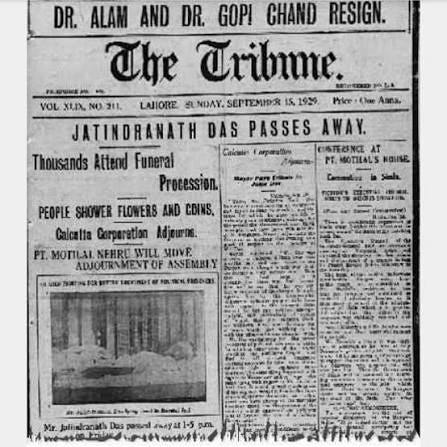
Hunger strikes were a common protest against prison conditions; in 1929, newspapers across the country reported the death of Jatindra Nath Das, a collaborator of Bhagat Singh, who died after a long hunger strike.
You could write a whole book about colonial prisons (and people have! Go read them!) but I think it’s safe to say they weren’t great places for their convicts. What about the undertrials?
Our earliest colonial sources aren’t that interested in them, but we know they existed. The 1838 Macaulay Committee report notes that in some places “accused persons are, generally, but not always, kept separate from convicted prisoners” though not everywhere. It spares them little attention, noting only that prison authorities should try not to shackle undertrials, and perhaps give them some means of working to earn money.
The 1920 Cardew Committee report goes into more detail. Its authors lamented that little had changed for undertrials since Macaulay put pen to paper over 80 years before; undertrials were still mixed together with convicts, and many languished for months without trial. The Committee expressed its hope that “all local Governments will continue to press on the attention of the courts the objections to the prolonged detention of untried prisoners in prison and will do all that is in their power to promote the speedy disposal of criminal charges against persons in custody.”
Unfortunately, things only got worse in the decades after. As our freedom struggle entered its most active phase, the 1930s saw British India’s prisons flooded by political prisoners, with over 100,000 arrested between 1930 and 1932 – some were convicted, some were ‘detenues’ held without charge under various security laws, and many became undertrials held for long periods while awaiting trial at the deluged courts. Amidst the chaos, prison reform became a distant priority for colonial authorities desperately trying to put a lid on the kettle about to boil over.
As we know, they failed in the end. In 1947, we became a free country.
And our undertrial problem had just begun.
New Country, Old Problems
When India won independence in 1947, it inherited the entire existing system, including its Indian personnel. Some of these facilities, like the infamous Cellular Jail on Andaman Island, were decommissioned. Several are still in use: Mumbai’s Arthur Road Jail, famous for hosting high-profile convicts, started life as a colonial prison, as did Yerwada Jail in Pune.
That was a dangerous pattern. Scholarship of colonial prison systems often highlights the ways in which callousness and brutality lingered after the colonizers were long gone. In many an African nation, the same locally-hired jailors who tortured prisoners for their colonial overlords went straight to torturing prisoners for their postcolonial dictators.
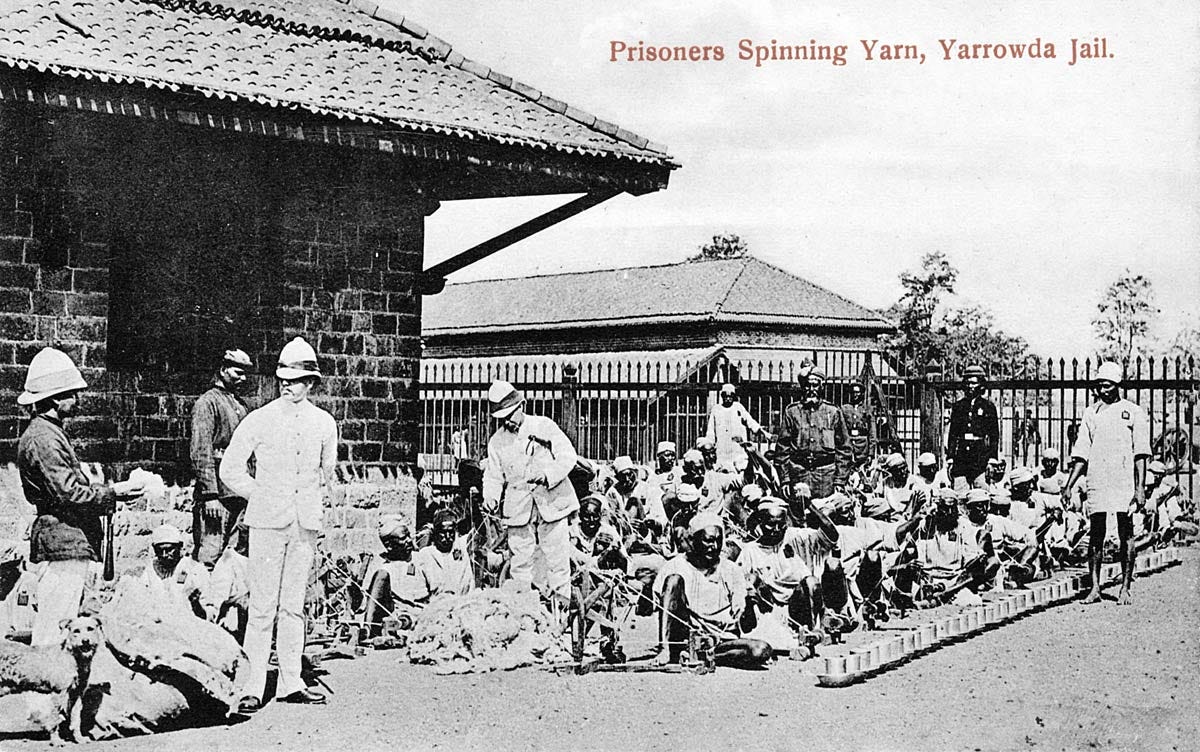
To everyone’s relief, India’s new government tried hard not to go down that depressingly well-trodden road. In 1951, the Jawaharlal Nehru’s government invited a foreign expert to survey its jails, an American criminologist named Dr. Walter Reckless. Arriving to great fanfare, Reckless met with top officials in New Delhi, and was received personally in Bombay by the Chief Minister and Home Minister of then-Bombay State (the latter, Morarji Desai, would go on to be Prime Minister).
Unfortunately, Reckless was much less impressed with the state of our prisons than with our welcome. Writing back to the American Prison Association, he lamented the number of undertrials already starting to fill up India’s jails: “Prisoners awaiting trial are very numerous. They wait for long periods. They are not allowed to work or have any program because they have not been convicted.”
Reckless was careful with his work (despite his last name). He spent months in India touring jails and speaking with prison officials. The result was a hefty report titled Jail Administration in India. In it, he warned that Indian prisons were badly overcrowded, staffed by poorly trained officers, and still governed by an outdated colonial philosophy that emphasized custody over rehabilitation. He specifically recommended streamlining police and judicial procedures to get undertrials out of prison as fast as possible.

After a committee was put together to make detailed recommendations in 1957, a Model Jail Manual was sent around to India’s prison administrators in 1960. Among other reforms, it emphasized giving undertrials the right to meet their legal advisers, draft court documents, and ask for bail.
Unfortunately, the manual was merely advisory. We don’t have hard data on implementation, but we do know one thing. The number of undertrials kept getting higher and higher.
Undertrials probably became the majority of the incarcerated sometime in the late 1970s; at the start of 1978, according to the Mulla Committee report, they made up 54% of the overall prison population. By the end of the same year, that proportion had shot up to 64%. The Committee’s report claims this was down to a massive drop in the number of actual convicted prisoners, though it doesn’t explain that drop – I suspect it’s partly down to a continued release of political prisoners after the Emergency, but I’m not sure.
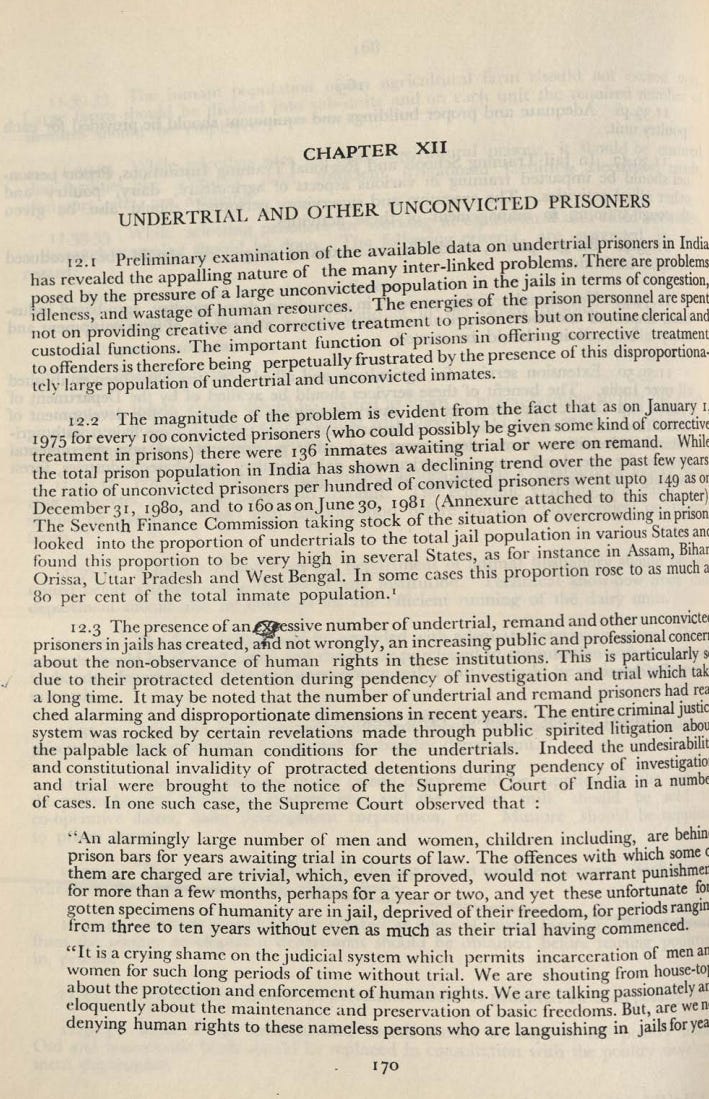
Whatever the reason, by the later end of the 1970s, it was becoming clear that the undertrial crisis had intensified. A National Police Commission note from 1978 put it in surprisingly poetic fashion: “These are the people without a calendar or a dock, only a date in a court diary, extended from hearing to hearing.”
A version of that phrase has since become a bitter inside joke for the legal community. In the iconic 1993 Bollywood legal drama Damini, a lawyer struggling to secure justice in an apathetic system descends into a furious tirade in the courtroom. “Tareekh pe tareekh!” he shouts. “Dates after dates! We only get dates, never justice!”
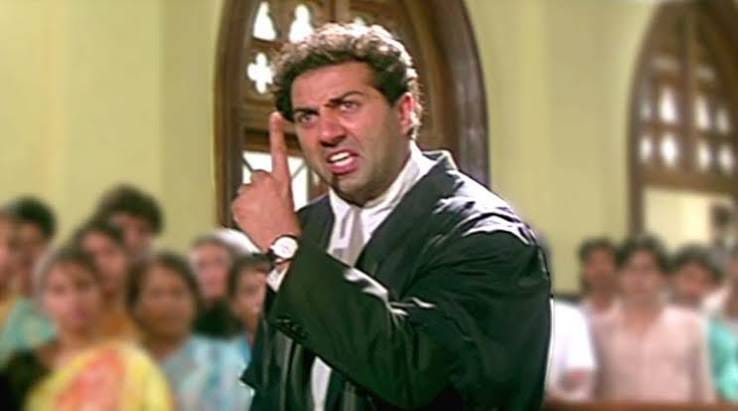
Today, lawyers in India’s courts toss the phrase around when a hearing is delayed yet again, or a judge doesn’t show up, or the day is far too full to fit their case in. “Tareekh pe tareekh”. Dates and more dates. A hearing is scheduled, all parties show up, they set a date for the next hearing, rinse and repeat ad nauseam. Cases like this have gone on for months, years, even decades.
The problem was clear. The solution was less so.
In 1979, the Supreme Court of India established a constitutional right to a speedy trial in Hussainara Khatoon v. Home Secretary, State of Bihar, a case brought on behalf of thousands of undertrials who’d been rotting in the state of Bihar’s prisons for years. Authoring the decision, P.N. Bhagwati, a future Chief Justice with an otherwise mixed legacy, asked “What faith can these lost souls have in the judicial system which denies them a bare trial for so many years [?]”
And yet, little changed. Nobody really defined ‘speedy trial’, and even though trials may have accelerated a little, news ones piled up even faster.
Every time someone wrote a report on India’s prisons, the first problem that popped up was the undertrials. The problem kept getting worse and worse. By 2015, 67% of incarcerated Indians (2 in 3) were undertrials.
Some progress was made in freeing incarcerated persons who hadn’t been convicted. For one thing, the Indian Lunacy Act of 1912 has been repealed, so the non-criminal mentally ill can no longer be kept in jail (a state of affairs that only changed in 1987). The Mulla Committee had also pointed out cases where perfectly innocent people of sound mind had been hauled into jail – apparently, women running away from ashrams where they had been abused were being sent to “protective custody” in prison against their will. This largely no longer happens.
And yet, today, 3 in 4 Indian prison inmates are undertrials. That proportion reached a historic peak of 77% in 2021, when the COVID-19 pandemic delayed trials and jammed the legal machinery. Despite a marginal decline since then, the problem remains grave.
We’re either arresting too many people, or we’re just not getting them into trials in any reasonable length of time – or both! So what’s going on?
Why Can’t We Finish Our Trials?
To take a case to trial, and actually see it through, you need a few things – the single most important one being the judge. And that’s our first roadblock – there just aren’t enough judges.
The earliest data I have on the country’s judge to population ratio comes from the Law Commission’s 1987 report Manpower Planning in Judiciary, which reported a figure of 10 judges per million people. That report urgently recommended that we try to hit 50 per million, to deal with a rapidly mounting caseload.
Today, almost 40 years later, we’re still at 22 per million. For reference, China maintains ~300 per million, even after they cut their judge count drastically about a decade ago. Granted, China is a police state that really likes prosecuting people. The United States, a democracy, has a more reasonable 150 judges per million people, relatively 7 times more than we do.
At least our judge count has increased twice as fast as our population. But that’s eliding a more important factor: what kind of caseload are judges dealing with?
Our population has almost doubled since 1987. Our judge count has close to 4x’d. Meanwhile, the NCRB recorded some 1.6 million criminal cases under the Indian Penal Code in 1990. According to the National Judicial Data Grid, we now record about that many new cases every single month.
The total number of pending court cases, across criminal and civil, has doubled since 2010 alone, from 25 million to about 55 million.
There’s a two-fold problem here. The sanctioned strength of benches just isn’t that high, and we don’t even brush against that number - as we speak, there are over 5,500 empty positions across district and High courts.
In 2023, the government think tank NITI Aayog estimated that it would take 300 years for the current judiciary to clear the existing backlog, and that’s assuming not a single new case was ever filed.
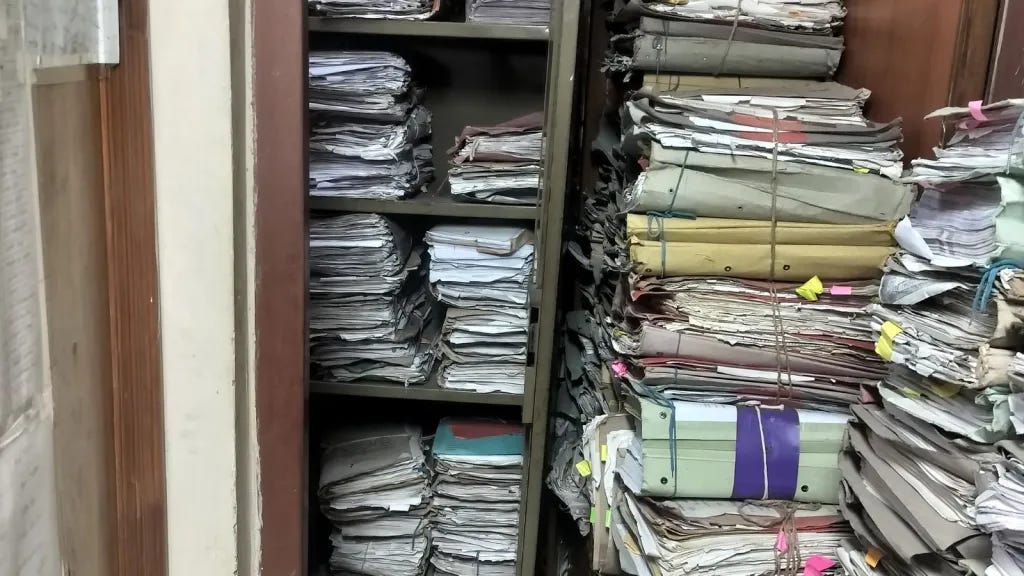
A large part of the problem is the way we handle trials. Unlike in many jurisdictions, Indian criminal trials are often disjoint. While Hollywood legal dramas have cemented the popular idea of trials as a multi-day marathon that doesn’t stop until a decision is reached, the reality is that Indian criminal trials are fragmented across dates. One day might see arguments on evidence, then a stall for months, then a few witnesses, more months, a few more witnesses… and so on. Even simple cases take months; for more complex ones, it’s usually years.
There are two problems with this. One: Judges understandably lose touch with the case in the long interims, and require a lengthy recounting of arguments thus far every time the trial resumes.
Two: It’s likely not even the same judge! District court judges are transferred around fairly often. Every time a new judge shows up to a case, they have to have the evidence presented anew, and the cycle repeats. Trials rarely begin and conclude under the same judge.
In 2012, a research team led by the Indiana University scholar Jayanth Krishnan heard from a Maharashtra judge that in her many years of service, she had only managed to oversee two or three criminal trials from beginning to end (and not a single civil one).
So there aren’t enough judges, they’re dealing with too many cases, and the cases are all taking far too long to get anywhere. Which raises the question:
Where are all these cases coming from?
Here’s big problem number two. Anyone who looks closely enough (or looks at all) at India’s legal system comes away with one realization: a lot of people are probably getting arrested for no reason.
This is a problem that reports have highlighted for decades. As far back as 1978, K.F. Rustamji, then one of the country’s most eminent police officials, toured the jails of Bihar and found many, many prisoners locked up despite their clear innocence: “The law had picked them up because the number of cases had to be brought up to the specified figure.”
Rustamji’s colleagues on the National Police Commission did their own research for a 1980 report, and concluded that up to 60% of arrests were unjustified or unnecessary – police were abusing their arrest powers to present the illusion of investigation, pump up their numbers, and extract bribes from hapless arrestees.
In 1983, the Mulla Committee concurred: “Today the number of innocent convicts in jails has appreciably increased.”
And we’re still at it today! Lawyers I’ve spoken to unanimously complain that a lot of their defendants are picked up for essentially no reason. There are whole categories of cases that probably won’t ever reach conviction. For instance, possession of stolen property is not a crime unless you can prove that the suspect knew the goods were stolen, which you rarely can (and they’re often actually unaware).
In many cases, there isn’t even a faint connection: random people, usually poor ones, are picked up whenever the police need to show they’ve made arrests. The University of Toronto anthropologist Beatrice Jauregui shadowed Lucknow beat cops for two years for her 2016 book Provisional Authority, and found them frequently fabricating evidence and extorting false confessions. The process, explained away by constables with the uniquely Indian term ‘jugaad’, was entirely routine.
To her credit, Jauregui argues it’s not all driven by pure malice. Indian street cops are the product of an environment of conflicting legal, political, and social pressures. Our rule of law is weak and fluid; cops adapt to the situation at hand. The result, either way, is that a lot of low-level criminal charges have no evidence behind them.
There’s no good data on the scale of the problem, only scattered statistics on particularly severe facets of it. Here’s one especially worrying figure: between 2016 and 2022, India’s High Courts and Supreme Court acquitted some 200 death penalty cases on appeal. According to the Square Circle Clinic (formerly project 39A), fully one-third of death row appeals resulted in acquittals in the ten-year period they studied.
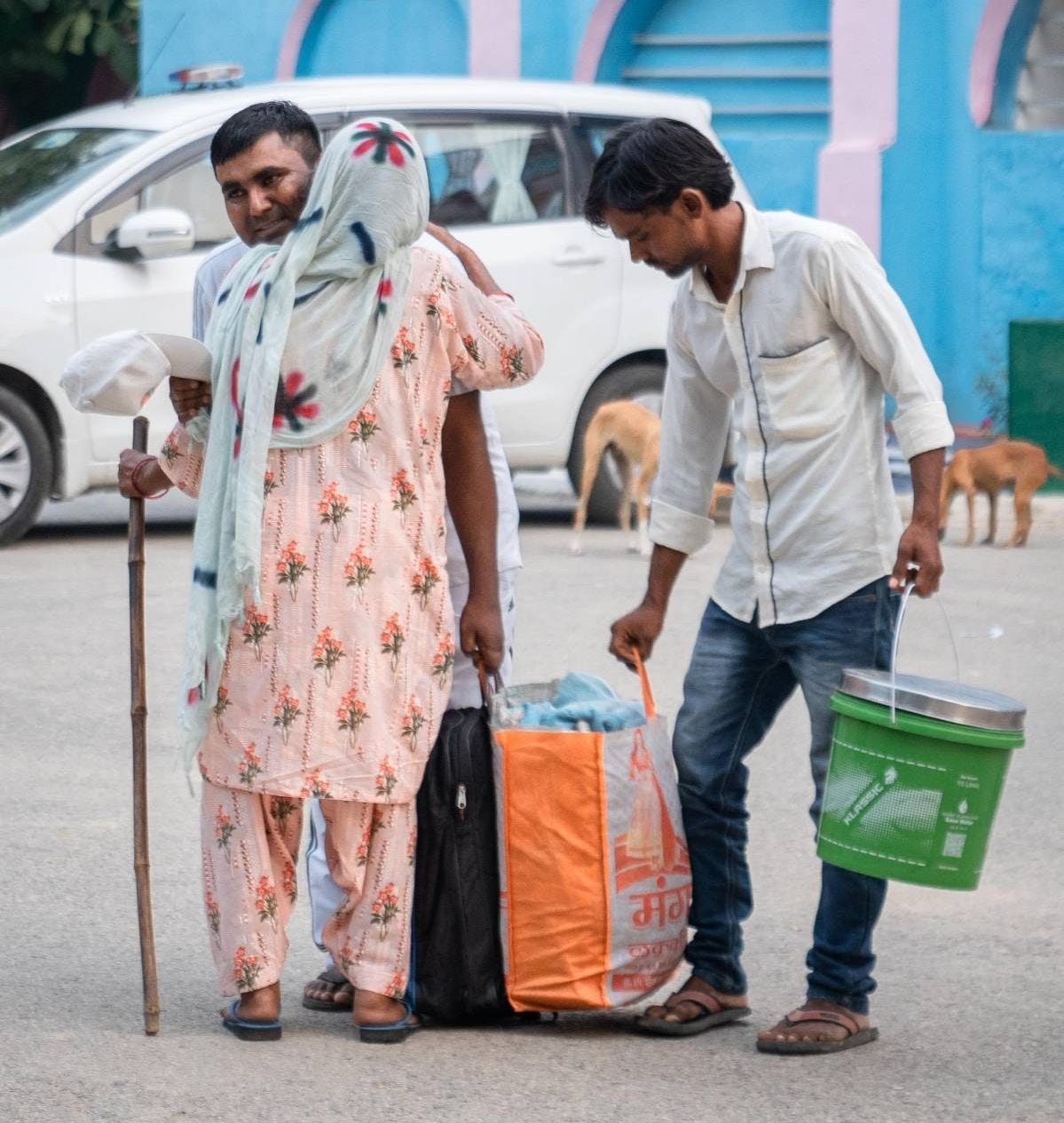
If these serious cases, with their high burden of proof, have seen so many miscarriages of justice, it’s safe to say it’s much worse for petty crimes, which create the bulk of the undertrial population. Many of these people – maybe most! – are likely innocent, and don’t deserve to spend a day of their lives in prison.
But, you might argue, this shouldn’t be a problem. If there’s so little evidence, the cases just shouldn’t go to trial - they should just end then and there, right?
I wish. I dearly, dearly wish.
Why Are These Cases Going To Trial?
If many of our undertrials are obviously innocent, or at the very least have been arrested on flimsy evidence, why are these cases spending years wallowing in the court system? Shouldn’t someone look at the evidence, snort with contempt, and tell them to go home?
That’s what a well-designed system would do. But the Indian system is not designed to acquit people. It is not designed to create off-ramps at every step of the way. Instead, it is designed to do one thing: get people into trials.
What do I mean by off-ramps? In a fair judicial system that places the burden of proof on the prosecution (as it should), the balance should always tilt towards the accused – there must be a recognition that even the trial process itself is a genuine infringement on liberty, and should be resorted to only when the evidence merits one. At multiple stages between the accusation and the trial itself, there must be filters to weed out nonsense cases.
Here, for instance, is how America does it. Before any case goes to trial, it lands up on the desk of the local District Attorney (the equivalent of an Indian Public Prosecutor) who must make a decision on whether to formally charge or not.
Statistics vary, but nearly everywhere, a significant percentage of cases will simply end with the DA deciding not to proceed (to nudge them away from prosecuting clearly innocent people, DAs are often evaluated on conviction rates, though that practice brings its own perils).
But even if a DA decides to prosecute, and a trial starts, an American judge has the authority to simply dismiss the case if it becomes clear that the evidentiary bar isn’t being met, or that the prosecution has legally erred. And they absolutely use that authority: about 1 in 12 federal criminal cases in America end this way.
India, in contrast, has few off-ramps.
For one thing, in our system, prosecutorial discretion is far weaker. When a police case winds its way into the Public Prosecutor’s office, it’s their job to take it to trial, not to evaluate the chances of conviction – or even the validity of the accusation. Once an arrest has been made, it will almost inevitably become one more file on top of the mountain looming over our courts.
But that leaves India’s district court judges, who theoretically have the power to end these cases before the trial starts, if they feel the evidence doesn’t justify a prosecution. They can do this after the defence presents a ‘discharge application’, but they don’t even need to wait – they can just dismiss the case.
Except they don’t. While I don’t have exact statistics, dismissal of a criminal case is an extremely rare event. District court judges just don’t dismiss cases – and we now have some idea why.
The legal researchers Chitrakshi Jain and Prashant Reddy T. published a book last year, Tareekh pe Justice, which might be one of the only books ever written about India’s district courts. For full disclosure, Prashant is an acquaintance of mine. He’s also one of the best living observers of the granular details of our legal system. He and his co-author spent a long, long time trying to answer a specific question:
What happens to district court judges who genuinely try to grant bail as often as they can, and discharge cases that are clearly without merit?
What they uncovered was a system that consistently punishes these judges with arbitrary transfers, stalled careers, and opaque disciplinary proceedings. As a predictable consequence, district court judges are very reluctant to take that kind of control of their caseflow.
This is a phenomenon familiar to anyone who’s studied India’s district courts – the American scholar Robert Moog found essentially the same thing when he studied the courts of Varanasi in the 1990s – but I hadn’t realized how pervasive the problem was until I read Prashant’s research.
There are ancillary factors that also act to gum up the works; as any district court lawyer will complain to you at length, petty corruption is endemic. Courts are rife with networks of clerks, functionaries, and ‘fixers’ of all stripes: in the worst places, there’s a bribe for every filing and every hearing, which only gives everyone involved more incentives to get cases stuck in years-long trials.
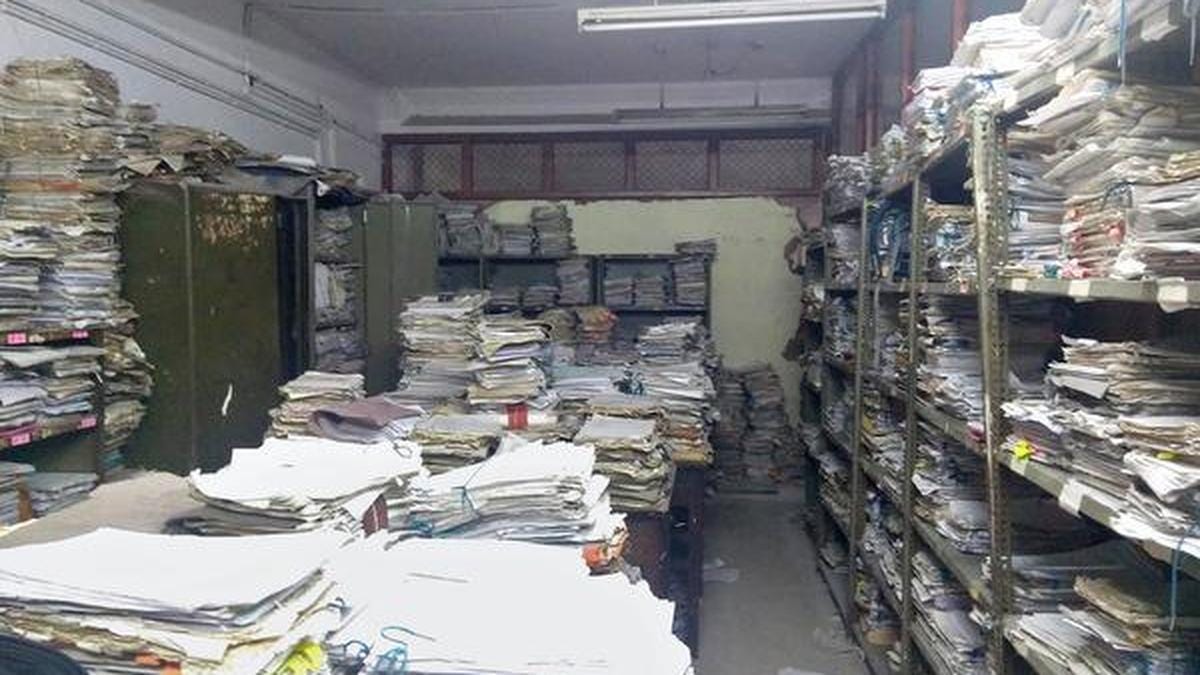
In brief, our current system is optimized to create more and more trials, piling up more and more case files until they quite literally fill entire courtrooms and tower over the judge’s bench (the visual metaphor really writes itself here).
And more trials are the opposite of what we need. Every time a trial starts, it means at least one person is going to be sitting in jail (unless they get bail) for months or years – and it means all the undertrials in the queue behind them are going to have to wait that much longer for their own trials. People are being arrested at a much higher rate than trials are concluded, so the problem will continue worsening.
Why Do They Have To Sit In Jail?
Let’s say we accept that our system arrests too many people, starts too many trials, and has too few judges to deal with them (each of which, individually, is an enormous problem). That still doesn’t answer a fundamental question: why are all these people sitting in jail? Isn’t that what bail is for?
Here’s a quick primer on the concept. The justice system relies on people actually showing up for their trials. It has two options to make that happen: keeping them locked up as undertrials, or letting them go home on bail, with either an amount of money paid to the state as a surety that they’ll return, or a written promise to abide by their bail conditions and return for trial.
Theoretically, anyone can be entitled to bail unless there are very good reasons to keep them locked up; they might be a flight risk, for instance, or have the power to intimidate witnesses unless confined. Anyone without a specific reason to stay locked up should be let go.
The unfortunate problem is that this principle is at odds with the way bail actually works. There’s usually no ‘default’ bail that’s granted automatically; getting bail, no matter how trivial the case and how unwarranted the imprisonment, still requires securing a hearing, making arguments ‘on the merits’ as lawyers put it, and getting a decision from a judge (sometimes made on the spot, often not). As I’ve explained above, district court judges are systematically incentivized not to be too liberal with bail.
The new trend in India’s judiciary is for bail appeals to show up at High Courts, and even the Supreme Court, in increasing numbers. These eminent jurisprudes are not happy to have to spend their time overturning bail denials. As our Supreme Court keeps reminding lower courts (with growing irritation), bail is, in theory, the rule, and jail should be the rare exception. But without reform to create a judicial culture that prioritized personal liberty, these frequent admonishments have often had little effect – the fact that they’re so frequent tells us something about how much they’ve been heeded.
To even start the bail process requires an undertrial to be aware of their right to bail at all – which many are simply not. The vast majority of Indian undertrials do not have, and cannot afford, a private defense lawyer. Until recently, they had to rely on the ‘panel’ system, in which a listed group of private lawyers agreed to take on their cases for a nominal fee. But panel lawyers spent most of their time on their own (actually paying) work, and little time on the poorest undertrials.
This became a big enough problem that a few years ago, the government actually started trialling a replacement legal aid scheme on the lines of America’s public defender model, which involved hiring full time defense lawyers to represent poor defendants and undertrials. There are now about 3,500 of these Legal Aid Defense Counsels (LADCs) across the country. Their work gets far too little attention – shameless plug, I recently shadowed a few in Delhi’s courts for a longform piece published in ThePrint – but from what I’ve been told by insiders, the number one objective of the program was to get undertrials bailed out and clear out India’s prisons.
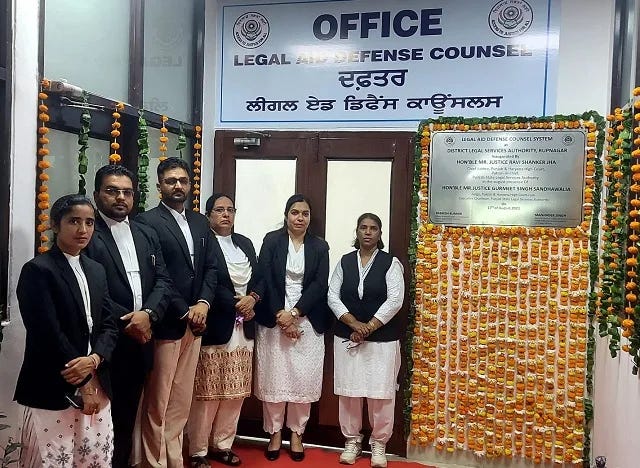
LADCs outside their newly-inaugurated office in Rupnagar, Punjab (PC: Royal Patiala)
Anecdotal accounts from these LADCs are revealing of what really keeps undertrials behind bars. Most, as I’ve said, had no idea they were entitled to a bail hearing. Many didn’t have any idea how to apply, or had lost their documents in the crowded chaos of their prisons. Quite a few couldn’t afford the thousands of rupees that they’d be required to deposit for bail, and had no idea they could try and get that amount waived, or connect with a network of NGOs and organizations that can help.
One case I encountered in Delhi’s district courts was a poor man who’d been sitting in Tihar for months, awaiting a trial for supposedly stealing 50 rupees; his incarceration cost the state more than that every single day.
This new system represents one approach to solving our undertrial crisis: just getting as many undertrials as possible out on bail. The tiny number of LADCs, and the massive number of undertrials, has meant each of them is swamped with dozens of cases at any moment, but from what I could tell, it genuinely was making a tangible difference. Until recently, we were one of few major democracies without a real public defender system, even though 80% of our population qualifies for free legal aid. The LADC system may have been the only major initiative of the last thirty years that fundamentally improved our capacity for justice.
Too bad we can’t have nice things in India. In its short life, the program has faced fierce opposition. Bar associations in more than one place have gone on strike, claiming that LADCs are taking work away from junior private lawyers who need it most.
LADC hiring was frozen earlier this year, and existing LADCs recently learned their contracts won’t be renewed when they’re up. As it stands, the program is likely to be shuttered.
This is a tragedy. The program was a good idea, and I think ending it would be a massive step backward and make everything much, much worse for our poorest and most vulnerable prisoners and undertrials.
(If anyone with any pull in NALSA or the Law Ministry happens to be reading this, don’t end the program! It’s not the whole solution – if anything, it’s a scented Band-Aid over the problem – but something is better than nothing.)
The Quiet Tragedy of the Undertrial
I think everyone generally agrees that it’s a travesty to have this many people sitting in our prisons without a conviction.
One, it’s bad for the country and its democratic values. If people are going to sit in prison for months without ever facing trial, it means that the state has a powerful weapon in its hands: the accusation of a serious crime alone carries a de facto prison sentence. That’s not a power I’d like for any government in this country to have.
And two, it’s bad for the people affected, who are losing months of their lives in atrocious conditions. Worse, undertrials are not actually segregated from the convicted prisoners – most of whom are petty offenders, but some of whom are much worse. Gangs, drugs, and arbitrary violence are endemic to our jails, and there’s decades of scholarship across dozens of countries that tells us what that’s likely to do to people. While there have been efforts to orient incarceration towards rehabilitation, the sad fact remains that few people leave an Indian prison in better condition than when they entered.
What nobody can really agree on is what’s to be done. This isn’t down to a single bottleneck, but the convergence of many – arguably, our system is essentially bottlenecks all the way down, stacked on top of each other with all the structural integrity of a late-game Jenga tower.
The district court judge count needs to be massively expanded, but even if you did that, there probably wouldn’t be enough prosecutors to actually get everyone into trial – prosecutor numbers have dipped so low lately that the government has started hiring some on contract to fill in the gaps.
If you somehow miraculously tripled our prosecutor count, your trials would still be delayed by the lack of police bandwidth to investigate and put their evidence together.
So many bail cases are clogging up the system that the limited sizes of High Courts, too, are now a significant bottleneck in getting people out of jail. The sheer volume of bail appeals is one reason the Supreme Court is in the process of adding four more benches to its lineup.
I don’t pretend to have all the answers, but I do think a lot of the conversation about undertrials continues to miss the point. We can create more benches, issue more guidelines, set up more legal aid schemes, all without addressing the root cause of the problem.
The best way to have fewer people in jail is simple: arrest fewer people, start fewer trials!
Create a stricter standard to be met before a case ever shows up in court in the first place. The justice system loses little in doing so: most undertrials are never going to be convicted, and everyone involved probably knows it.
Our undertrial problem is largely born of the institutional inertia of a machine calibrated to create criminal cases without worrying about the cost to those trapped in its grinding gears. That has to change. We owe it to ourselves, our fellow Indians, and our democracy itself.
Because right now, we’re failing to live up to a promise. Most of the people who founded this new nation of ours had been to prison, many without charge, and many spending months or years awaiting trial after arbitrary arrest. Had they just wanted to perpetuate the cycle, but with Indians in charge this time, India would today be yet another postcolonial cautionary tale (and probably a chapter in a Daron Acemoglu book). Instead, despite their many flaws and missteps, those people wanted this country to do better, to be better.
Are we really?
In Franz Kafka’s novel The Trial, a man is arrested for a crime that is never disclosed to him, and put through an opaque process with rules that nobody is allowed to tell him. He meets other defendants whose cases have dragged on for years, destroying their lives and shredding their sanities; all they can think of is their next court date, their next legal notice. He sees the same motions in court every time he’s there, the same people playing the same parts. Nothing ever changes, nothing ever moves forward.
When he asks for a way out, he is told by court employees that he may be able to secure postponements of his trial, or get a temporary reprieve – but the process could start again at any moment, a sword looming over his head. What he cannot do is end it. Only death will really see him free of it.
At the very end of the novel, two men come for him, lead him to an empty quarry, and stab him through the heart. In his dying moments, he reflects on the way he has been treated. His last words:
“Like a dog!”
There is something uncomfortably familiar about this. As we speak, thousands of our fellow citizens have been reduced to case files on a cluttered desk and hearing dates in a court diary. But they are people, every one, as real as you or me. It’s time our system remembered that.